ServicesPaint and Refinishing
Paint and Refinishing in Hanford
Faded, peeling or scratched paint usually has a reason behind it. We look at the finish closely, work out whether the trouble is in the clear coat, the color or the metal underneath, and then refinish only what needs it so the new paint matches and holds up.
Fixing the finish starts with finding the cause
Paint problems are easy to hide and hard to fix for good. If clear coat is lifting because the layer below it never stuck properly, spraying over the top only buys a few months. So before we quote anything, we check what is actually failing and how far it reaches.
Sometimes the answer is a single panel. Sometimes a scratch stops at the clear coat and polishing takes care of it. When a car spends years in strong Valley sun, the clear on the roof and hood often breaks down first while the sides still look fine, and we will tell you that plainly instead of selling you a full repaint.
Paint and refinishing is also the last step in most of our other work. After collision repair, dent repair or bumper repair, this is what makes the repaired area disappear into the rest of your vehicle.
What our paint and refinishing work includes
A close look at the finish
We inspect the damaged area under good light and check the panels around it too. That shows us whether we are dealing with surface scratches, failing clear coat or rust creeping under the paint.
Getting the color right
Your paint code is only the starting point. We spray test panels and compare them right next to your car, since years outdoors shift a color away from what left the factory.
Proper surface prep
Failing paint gets sanded back until we reach a solid edge. Bare metal and rust are treated and primed before any color goes on, because new paint can only last as long as the surface under it.
Blending into nearby panels
When the color calls for it, we feather the new paint into the next panel so you never see a line where old meets new. That step is often what separates a repair people spot from one nobody notices.
Clear coat, cure and polish
Fresh clear coat seals the color, then cures. Where needed we wet sand and polish so the shine and texture line up with the rest of your car.
Signs your car is due for paint work
Clear coat lifting or flaking
Hazy white spots, or clear that curls up at its edges, tell you the top protective layer has given out. It keeps spreading once it starts, and the color beneath fades fast without it.
Chalky or faded color
Paint that looks dull and rubs off on a rag has oxidized. Polishing can sometimes bring it back, and we will check that first.
Scratches deep enough to catch a fingernail
If your nail snags in it, the scratch has probably cut through the clear coat. Left alone, it lets moisture get to the primer or bare metal.
Bubbles or rust spots
Small blisters usually mean rust is growing under the paint. Catching it early keeps the repair to a small area.
A panel that doesn't match
A door or fender a shade off from its neighbors usually traces back to an older repair that was never blended. We can correct it so that side of your car looks like one color again.
How a paint job goes at our shop
- 1
Inspection and honest answer
You bring your car in and we look at the finish together. We explain what is failing, why, and whether polishing, spot repair or a full panel refinish makes sense.
- 2
Written estimate
You get the estimate broken out by panel and task, so you can see exactly what is being painted and why before any work starts.
- 3
Prep and masking
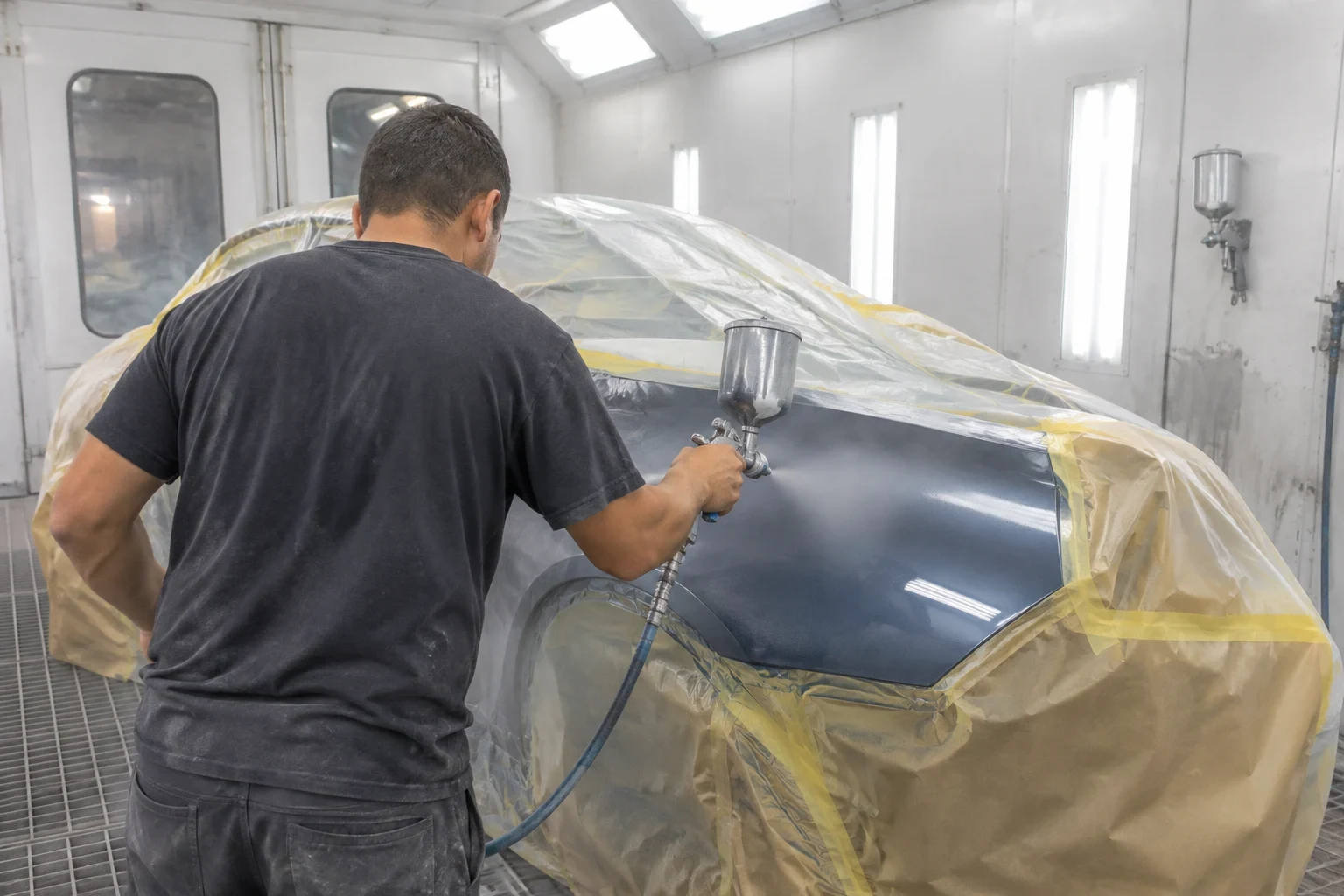
We wash, sand, repair and prime the area, then mask off glass, trim and the rest of the car so overspray stays where it belongs.
- 4
Paint, clear and cure
Color and clear coat go on in a clean, controlled spray area. The finish cures before we sand, polish and reinstall any parts we removed.
- 5
Final check with you
We look over the work in daylight before you pick up your vehicle, and we walk you through how to care for the new paint over the first few weeks.
What moves the cost of paint and refinishing
Paint pricing depends mostly on how much surface needs work and what condition it is in underneath. We price after we have seen your car, because two scratches that look the same can need very different repairs. The written estimate shows each item so nothing turns up later.
- How many panels
- One bumper corner costs far less than a hood, roof and trunk lid. Blending into a neighboring panel adds some time but is often what makes the color invisible.
- Depth of the damage
- Clear coat scratches may only need polishing. Damage down to primer or metal needs sanding, priming and full refinishing.
- Rust and old repairs
- Rust has to be removed and treated, and a poor earlier repair may need stripping before new paint will bond.
- Your car's color
- Tri-coat pearls, metallics and some specialty colors take more material and more steps to match than a standard solid color.
What drivers ask us about paint work
Something not covered here? (559) 576-5401
How close will the new color be to my original paint?
Color matching is where we spend most of our time on a paint job. We start from your paint code, spray a sample card, compare it against your car and tweak the mix, then blend into the neighboring panels when the shade calls for it. If the factory paint has faded a lot, a perfect match gets harder, and we will tell you that at the estimate.
Do I have to repaint the whole car, or can you do one panel?
One panel is often all it takes, and that is usually our recommendation. We only suggest more when the damage or wear actually spreads further. If your roof and hood have broken down but the doors and fenders are still in good shape, that is exactly what we will say.
How many days will my car be in the shop?
A small spot or a single panel usually means a short visit. Multiple panels or rust work take longer, since each coat needs time to cure before we move on. We give you a realistic timeline when you get the estimate.
How soon can I wash my car after the paint work?
After a brief wait, a gentle hand wash with a mild soap is normally fine. Skip automatic car washes and wax for the first several weeks while the clear coat keeps hardening. We go over the specifics when you come to pick up your vehicle.
Does insurance cover paint and refinishing?
If the paint damage came from a covered accident or incident, it is typically included in the insurance claim. Fading and wear from age generally are not. Our Insurance Claims page explains how we work with your insurer on the repair.
Let's find out what your paint needs
Give us a quick rundown of the scratches, fading or peeling you have noticed, and we will pick a time for you to bring your vehicle by. Before anything gets sanded or sprayed, you will hear what caused the problem and what your choices are.