ServicesDent Repair
Dent Repair in Hanford
Door dings, hail marks and creases from a parking lot bump can look alike at first glance. We check the paint, the metal and what sits behind the panel before we pick a method, so your car gets the repair it actually needs.
Picking the right way to fix a dent
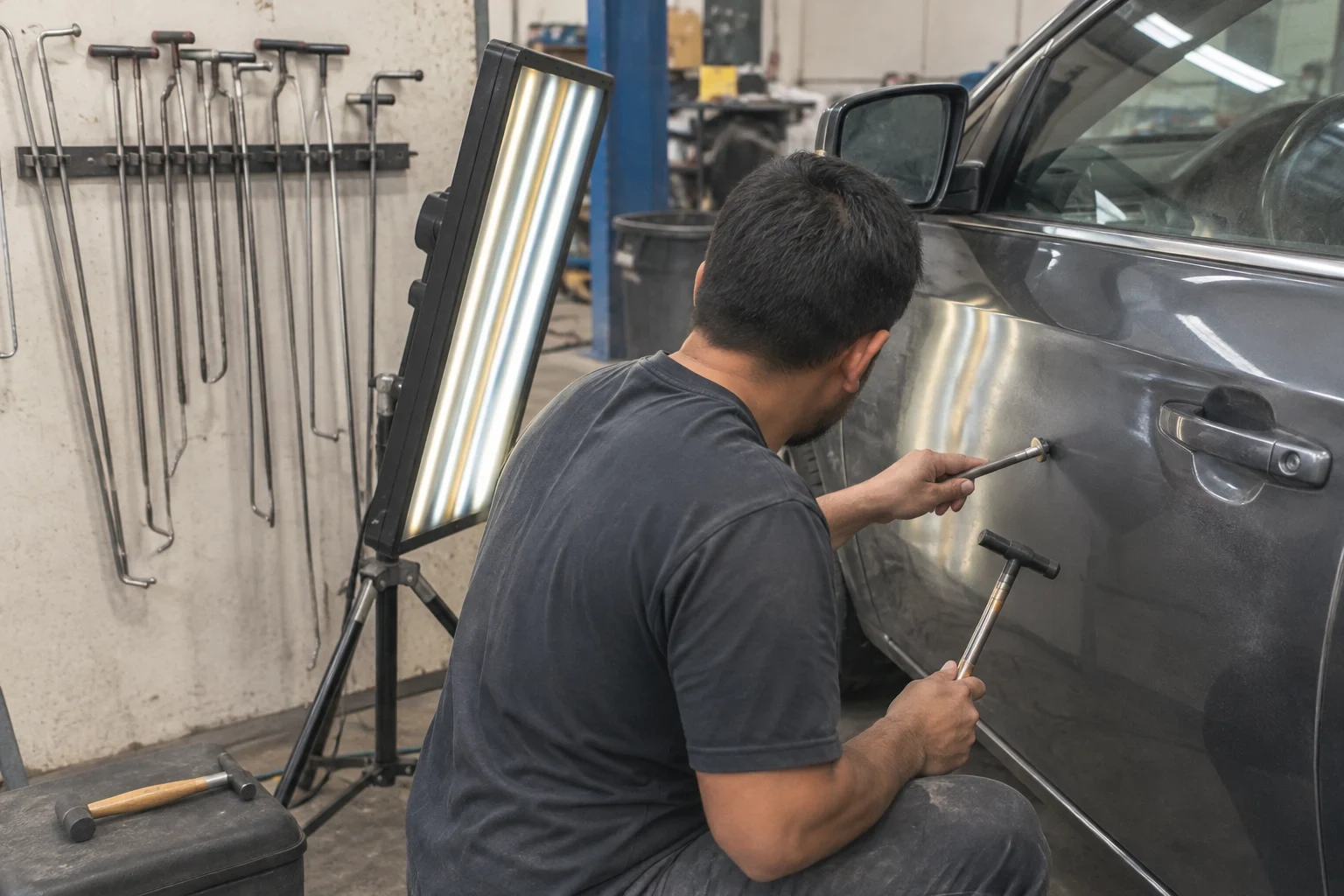
Most dents get fixed one of two ways. Paintless dent repair uses rods and glue tabs to slowly work the metal back to shape, and the factory paint stays untouched. Conventional repair pulls the panel close to its original shape, finishes it with a thin skim of filler, then primes and refinishes it to match the rest of your vehicle.
The right choice depends on details you often can't see from the driver's seat. Hairline cracks in the paint, metal that has stretched at the center of the dent, a brace blocking the back of the panel, or a bracket pushed out of place behind it can all rule out one method. We look for those first, because guessing wrong is how a simple dent turns into a second visit.
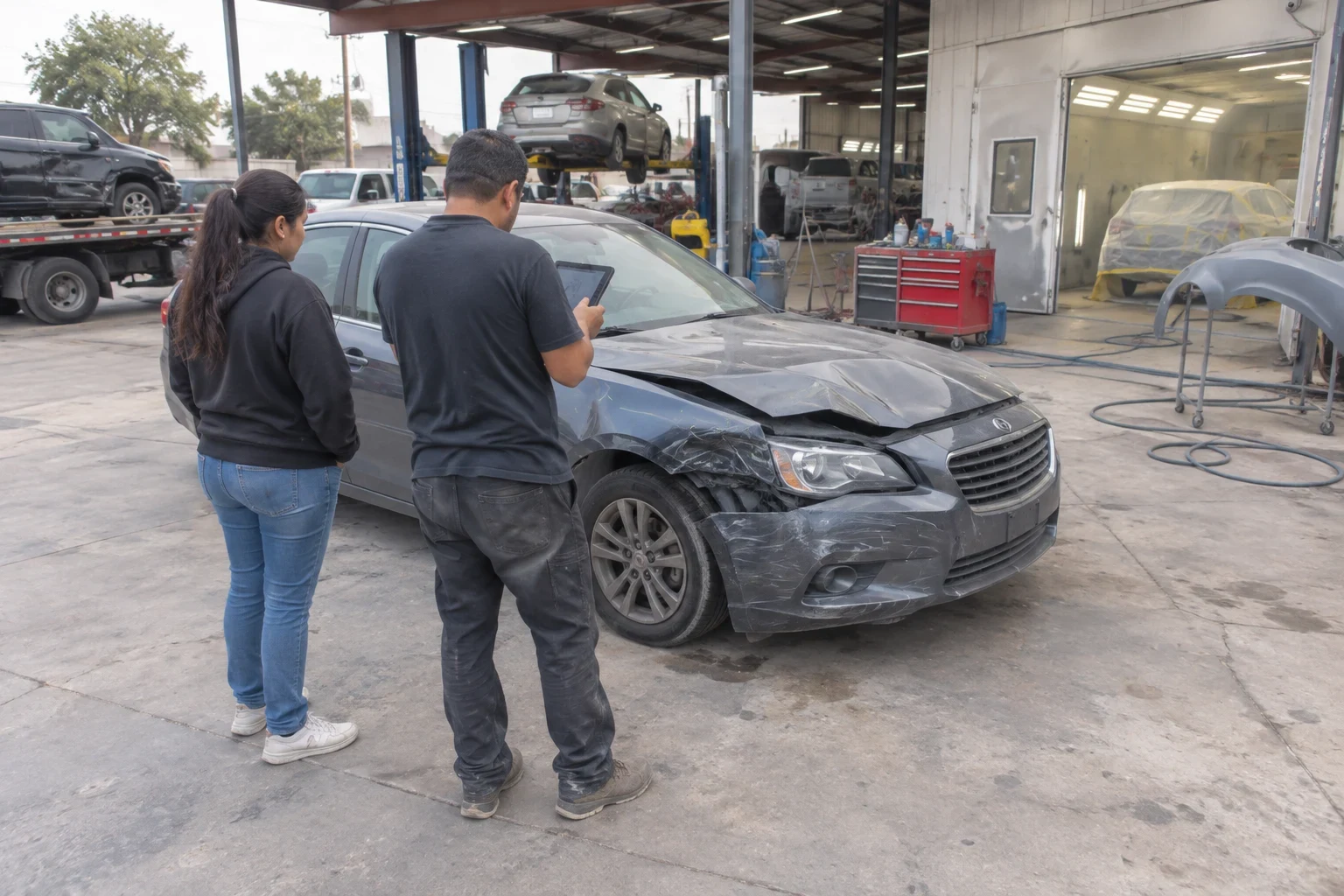
If the dent is part of bigger damage, we'll tell you plainly and talk about collision repair instead. If paintless work will do the job, we won't sell you a repaint.
What our dent repair covers
- 01
Paintless dent repair
For dings, soft round dents and many hail marks where the paint is still intact. Keeping the original finish means no color matching and no new paint to cure.
- 02
Creases and body lines
A dent that crosses a sharp body line takes extra care, because the line has to come back crisp and straight. We rebuild the line first, then work the flat areas around it.
- 03
Conventional repair with refinishing
When the paint has cracked or the metal has stretched too far to massage back, we straighten the panel, finish it smooth and refinish it. Our Paint and Refinishing work covers the color match and blending into the panels next to it.
- 04
Hail and multiple dents
We mark and count each dent on every panel under inspection lights so nothing gets missed. You see the full picture before the repair starts.
- 05
Aluminum panels
Many newer trucks and cars use aluminum hoods, doors and fenders. Aluminum has less give than steel and needs slower, more careful work, so we check the panel material before quoting.
- 06
A look behind the panel
Where it makes sense, we remove trim, liners or tail lights to see the back side. That's where we find bent brackets, loose wiring or pushed sensors that a dent can hide.
Questions about Dent Repair?
Call(559) 576-5401Signs a dent shouldn't wait
Cracked or chipped paint at the dent
Once bare steel is exposed, moisture starts working on it. Damp winter mornings in Hanford are enough to start surface rust in a cracked dent.
A door, hood or trunk closes differently
If a panel sticks, needs a harder push or leaves an uneven gap, the hit may have shifted a hinge or latch area. That calls for a closer look than a cosmetic dent.
A sharp crease instead of a soft dent
Creases stretch the metal more than rounded dents do. The sooner we see one, the better the odds of a clean repair.
Damage near a sensor or light
Rear quarter panels and bumpers often hold parking sensors or blind spot radar. A dent there can knock a sensor out of its aim even when the dent itself looks small.
Selling or turning in a lease
Small dents can cost you at trade-in or lease return. Fixing them before an inspection is usually the simpler path.
How a dent repair goes at our shop
- 1
Start with a phone call
Let us know which panel took the hit and what caused it, whether a shopping cart, hail or a low post. Together we'll pick a day that works for dropping off your vehicle.
- 2
Inspection under the lights
We study the dent with reflection lights, check the paint for hairline cracks and look behind the panel where we can. We photograph what we find and go over the pictures with you.
- 3
A written estimate with the method spelled out
The estimate names the method we chose, each line of work and the reason for it. If anything might change once a panel is open, we tell you upfront and phone you before doing extra work.
- 4
The repair
Paintless work is usually the quicker of the two. Conventional repair takes longer because filler, primer and paint each need time to set properly.
- 5
Final check and handoff
We look over the panel again under the same lights, then walk around your car with you so you can judge the result yourself.
What moves the price of dent repair
The cost of a dent repair depends on how much work the metal needs and whether the paint has to be redone. Each item appears as its own line on the written estimate, so you can see where the money goes before any work begins.
- Size and depth
- A shallow ding takes far less time than a deep dent about the size of your palm. Depth also decides whether paintless repair is an option at all.
- Location on the panel
- A dent in the open middle of a door is the simplest case. Damage that runs along a body line, wraps over a panel edge or sits close to the roof rail takes extra hours to bring back true.
- Paint condition
- Unbroken paint keeps the job paintless. Cracked paint adds filler, primer, color matching and blending into the panels next to it.
- Access to the back of the panel
- Reaching some dents means removing trim, a headliner or a tail light first. That labor is listed separately on the estimate.
- Steel or aluminum
- Aluminum panels need slower, more careful work than steel, which adds time to the repair.
Dent repair questions
Will paintless dent repair work on my dent?
It works best when the paint is unbroken and the metal hasn't stretched too far. Soft dents, door dings and most hail marks are good candidates. Sharp creases, cracked paint and dents on panel edges often are not. We'll tell you which applies after we've looked at it in person.
If my dent needs paint, will the color match?
We match the color to your car's actual finish, not just the factory code, since paint changes with age and sun. Then we blend into the neighboring panels so the repaired area doesn't stand out. Our Paint and Refinishing page explains that process in more detail.
Should I file an insurance claim for a dent?
It depends on the repair cost compared with your deductible. Many small dents cost less to fix than a typical deductible, so it can make sense to see our estimate first. If you do file, our Insurance Claims page explains how we work with your insurer, though the adjuster still makes the coverage decisions.
How long will my car be at the shop?
Paintless repairs are often quick, while dents that need refinishing take longer because each coat has to cure. We'll give you a realistic timeframe when we write the estimate, based on your specific dent.
Can you fix a dent in my plastic bumper cover?
Plastic bumper covers are repaired differently from metal panels, often with heat and plastic repair materials. We handle that as part of our Bumper Repair service.
Is it okay to leave a small dent alone?
If the paint is fully intact, a small dent won't rust and can wait. If the paint is cracked or chipped, even slightly, it's worth fixing before moisture gets to the metal underneath.
Let's take a close look at that dent
Tell us where the dent is and how it happened. We'll set a time for you to bring your car to our shop in Hanford, look it over carefully and explain which repair fits.