ServicesFrame Straightening
Frame Straightening in Hanford
After a hard hit, the damage you can't see often matters most. We measure your car's structure point by point, show you where it moved and straighten it back to factory dimensions so the doors, wheels and panels all line up again.
What frame straightening fixes
Every vehicle is built around fixed reference points. When a collision pushes those points even a few millimeters out of place, the car can look fine and still drive wrong, wear tires unevenly or close its doors with a little extra shove.
Most cars and crossovers use a unibody, where the floor pan, rails and pillars make up the structure. Many pickups still ride on a separate full frame. We work on both, and the first job is always the same: measure before we touch anything. Guessing leads to pulls in the wrong direction, and a second repair nobody wanted.
If the hit also left creased panels or a cracked bumper cover, our collision repair and bumper repair work picks up once the structure is square. Straightening comes first because nothing bolted on afterward will fit right until it is.
What the work includes
Full structural measurement
We check your vehicle's control points against the manufacturer's published dimensions. You get a clear picture of which points moved, which direction and how far.
Photos of what we find
Bent rails and buckled aprons are hard to picture from a description. We photograph the damage once panels are off so you can see it for yourself.
Anchored, controlled pulls
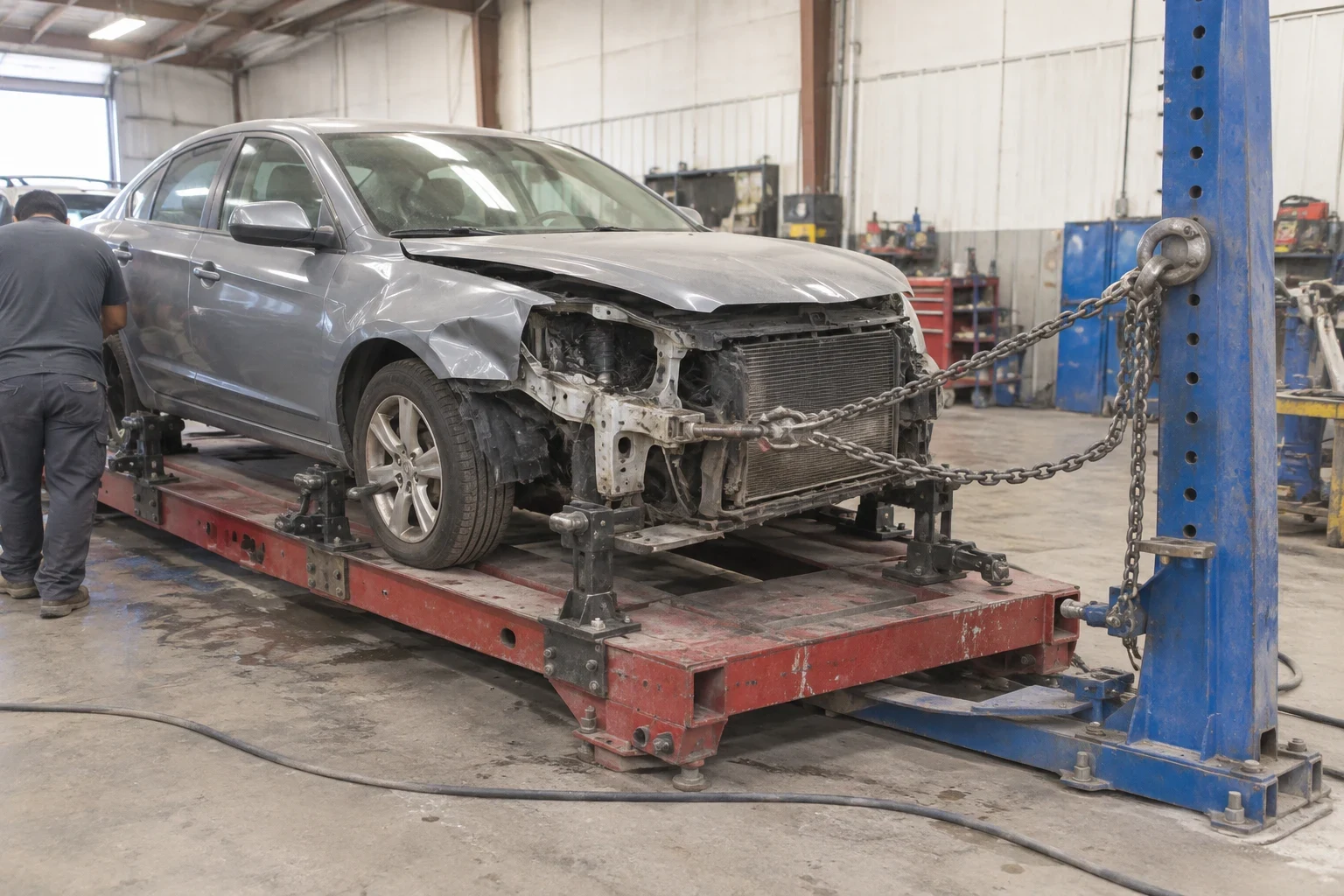
The vehicle is clamped to a straightening bench and pulled in measured stages. We re-check dimensions between pulls so the metal is moved back, not overcorrected.
Section repair when straightening isn't right
Some modern high-strength steels are not meant to be pulled or heated past a certain point. When the manufacturer's repair procedure calls for replacing a section instead, we tell you why and show you the guidance.
Final verification
After the structure is back in spec, we measure again and check how the suspension mounting points sit. That's how we know the wheels can be aligned properly and the panels will gap evenly.
Signs your car may need frame work
- Gaps that don't match
- Look along the hood, doors and trunk. If one side has a wider gap than the other, or a panel sits higher, something underneath may have shifted.
- Doors or trunk that fight you
- A door that needs a slam to latch, or a trunk lid that won't line up with the striker, often points to a pillar or rear rail that moved.
- Pulling or a crooked wheel
- If the car drifts to one side or the steering wheel sits off-center after a collision, an alignment alone may not hold. The mounting points it depends on could be out of place.
- Fast or uneven tire wear
- Tires scrubbing on one edge soon after a crash can mean the wheels are no longer tracking straight.
- New noises and leaks
- Wind whistle at highway speed, water in the trunk or a creak over bumps can all come from a body that has twisted slightly out of shape.
How a frame repair moves through our shop
- 1
A conversation by phone
You tell us what happened and what you're noticing. We'll set a time for you to bring your vehicle in, and explain whether it seems safe to drive here or should be towed.
- 2
Teardown and measuring
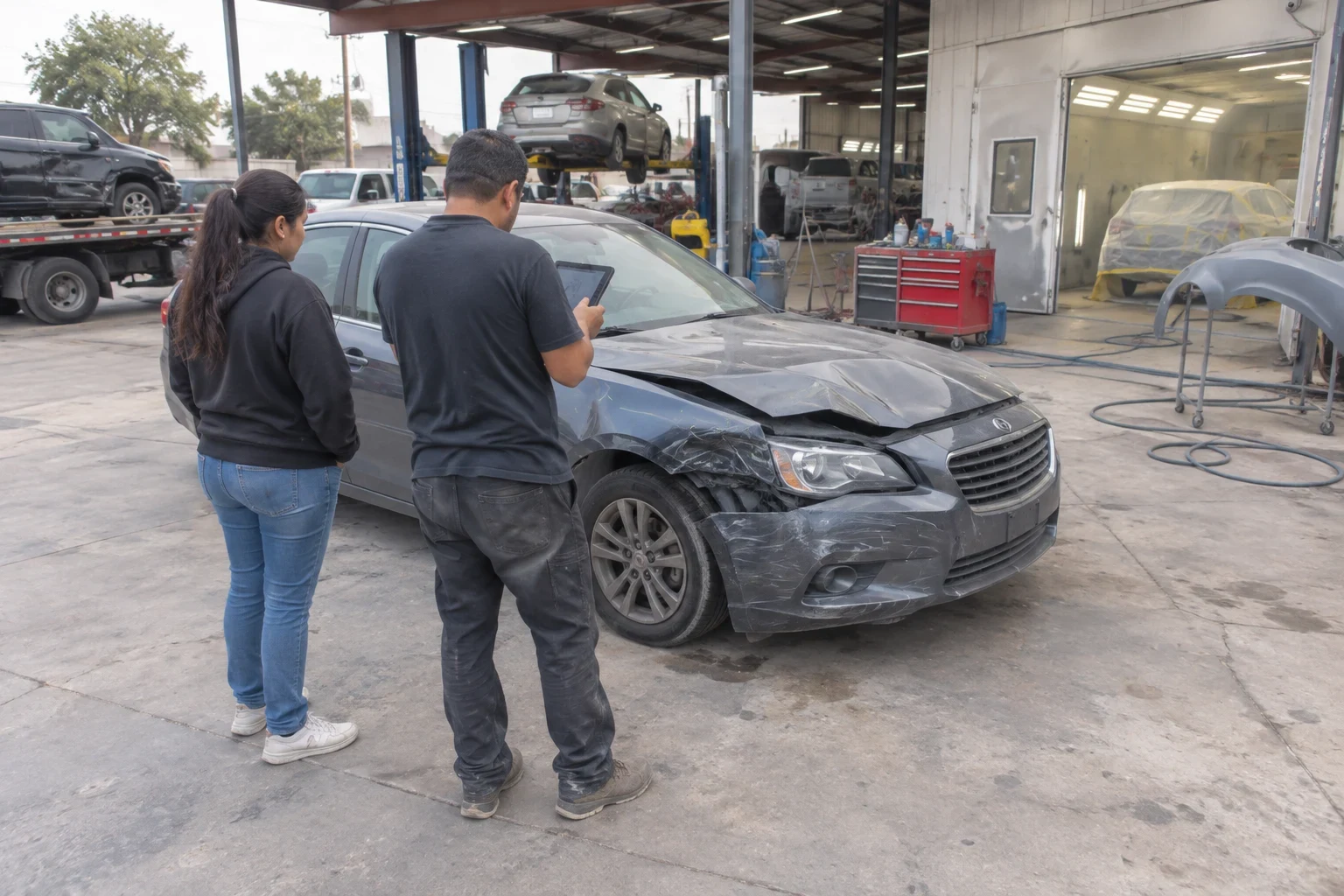
We remove the damaged parts covering the structure and measure. This is where we find the actual cause of the symptoms instead of assuming. You get a written estimate that lists each repair line.
- 3
Straightening on the bench
With the plan agreed, your vehicle goes on the bench. We pull in stages, measuring as we go, and replace any sections the manufacturer says must not be straightened.
- 4
Rebuild and refinish
Panels, bumpers and trim go back on. Any areas that need color are handled through our paint and refinishing work so the finish matches the rest of the car.
- 5
Final checks before pickup
We measure once more, check alignment and road test. At handoff, we go over the repair with you line by line and put the measurements from before and after side by side so you can compare them.
What affects the cost of frame straightening
There's no honest flat price for frame work, because two cars with similar-looking dents can have very different damage underneath. We give you the estimate after measuring, so the number reflects what is actually bent. If more damage turns up once we're further in, we stop and talk with you before going on.
- Where the impact landed
- A corner hit that moved one rail is a different job than a hit that shifted the whole front structure or pushed into a pillar.
- Unibody or full frame
- Unibody repairs often involve more panels and welded sections. Full-frame trucks can be heavier to set up but sometimes straighten more directly.
- Straighten or replace
- When a rail or apron is made of steel that the manufacturer says must be replaced rather than pulled, parts and welding time add to the job.
- Parts attached to the structure
- Control arms, crash sensors and the cameras behind your vehicle's safety features bolt to the same metal we're straightening. Once it's back in spec, some of them may need new parts or a fresh calibration, and that goes on the estimate as its own line.
Frame straightening questions
- Will my car be as strong as before?
- That's the goal of measuring to factory dimensions and following the manufacturer's repair procedures. When a part can't safely be straightened, we replace it instead of forcing it. We'll show you the final measurements so you know where your car ended up.
- Is a car with frame damage a total loss?
- Not usually. Many vehicles with bent rails or a shifted apron are repaired every day. Whether it makes sense comes down to the extent of the damage compared with the car's value, which is often your insurer's call. We'll give you an accurate picture of the repair so that decision is based on real numbers.
- Can I drive my car to the shop?
- Sometimes. If the wheels track straight, nothing is rubbing and no warning lights are on, a short careful drive may be fine. If it pulls hard, leaks fluid or a wheel looks pushed back, have it towed. Describe it to us by phone and we'll help you decide.
- How long does frame straightening take?
- It depends on how much moved and whether sections need replacing or parts need ordering. Once we've measured, we can give you a realistic timeline and keep you updated if anything changes.
- Does insurance cover frame repair?
- When your policy covers the accident, the work to put the structure back in spec usually belongs in the same insurance claim as the rest of the repair. Our measurement printouts and photos give your adjuster clear evidence of what bent and by how much. The insurance claims page explains how we work alongside your insurer.
Find out what really moved
Tell us about the collision and what your car is doing now. We'll set up a time to measure it in Hanford and give you a straight answer on the repair.