ServicesCollision Repair
Collision Repair for Hanford Drivers
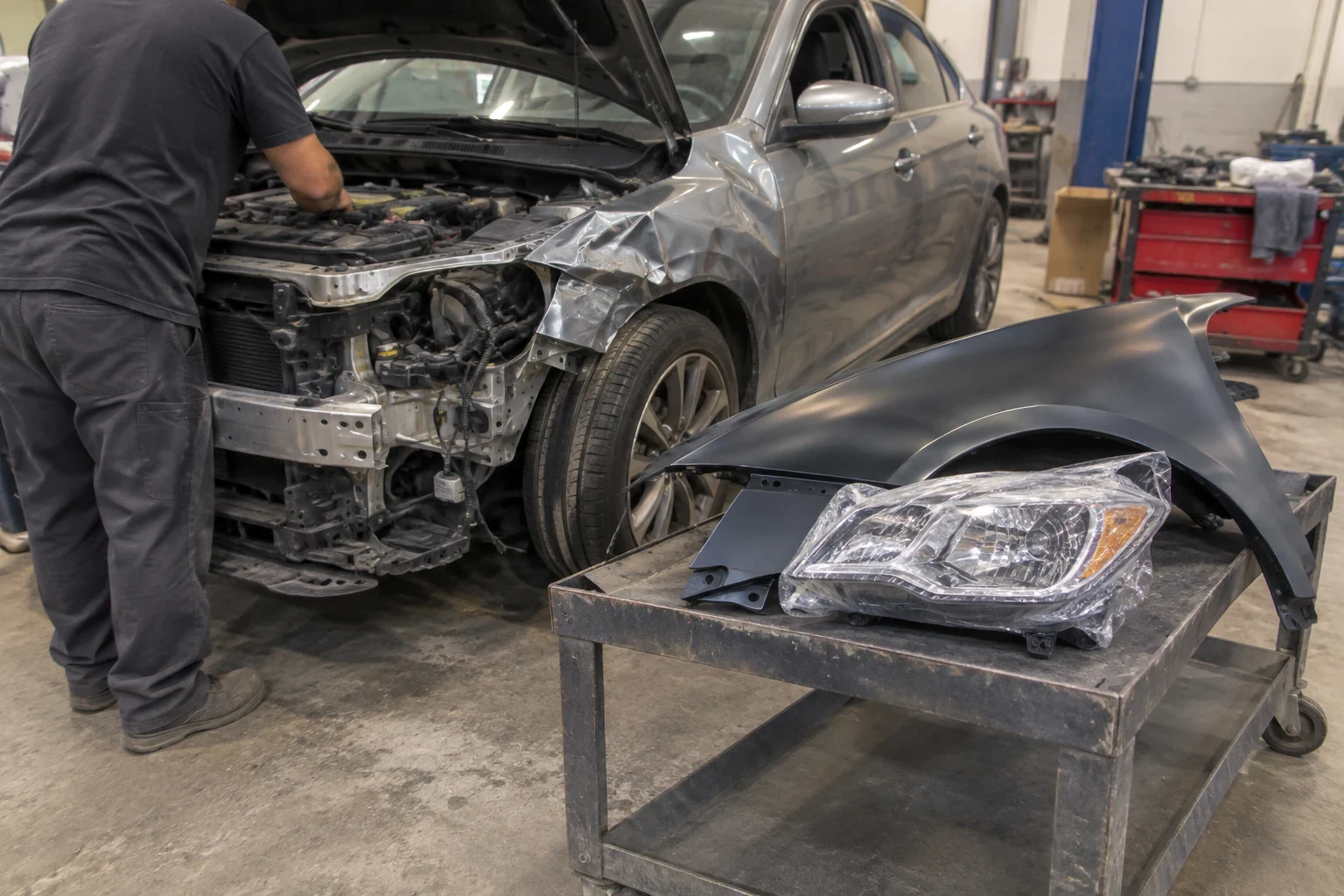
A crumpled fender is easy to spot. A cracked bracket or a shifted radiator support behind it is not. We take apart the area that was hit, trace every part the impact reached and write the estimate from what we find, so your car gets fixed once.
What collision repair covers and when you need it
Collision repair brings your car back after an impact. That can mean repairing or replacing outer panels, the parts mounted behind them, the structure underneath and the paint on top. Light scuffs may only call for Dent Repair or Bumper Repair. When a hit goes deeper than the outer skin, it is a collision job, and the sequence of the work starts to matter.
Today's cars are designed to fold and absorb force in specific places. The plastic cover on a bumper may flex back and look fine, while the foam behind it is flattened, the steel bar is kinked and a parking sensor now points the wrong way. A shop that only repairs the visible part leaves those behind, and they come back as rattles, dash warnings or steering that drifts.
So we track down what caused each symptom before we fix anything. We remove what has to come off, measure where measuring is called for and walk you through what we found before you approve the repair.
What our collision repair includes
- 01
Inspection with panels off
Damaged trim and panels come off first so we can look at the energy absorbers, brackets, radiator support and wiring underneath. This is where most hidden collision damage turns up, and it happens before a single part is ordered.
- 02
Structural measuring
If the hit was strong enough to reach the frame or unibody, we measure it against the manufacturer's specs. When it is out of spec, your vehicle goes to Frame Straightening before any cosmetic work starts.
- 03
Repair or replace, panel by panel
Metal that can be brought back properly gets repaired. Metal that can't gets replaced. We explain which call we made on each panel and why.
- 04
Sensor and safety system checks
Cameras, radar units and parking sensors often live in the bumper, grille and mirrors. After the repair we confirm they work and point where they should, since a sensor aimed a few degrees off can trigger dash lights or miss a hazard.
- 05
Color matched to your car
Repaired panels are refinished and blended into the ones beside them, so the color looks like one car in full sun. The Paint and Refinishing page covers how we match color.
- 06
Road test before pickup
We take your car for a drive to listen for noises and check that it tracks straight, then go over the finished work with you.
Questions about Collision Repair?
Call(559) 576-5401Signs your car needs more than a quick fix
Panels that don't line up
Uneven gaps around the hood, doors or trunk mean something underneath has shifted. That is rarely just a cosmetic issue.
New warning lights
A lane-keeping, parking or airbag light that appears after an accident points to a damaged sensor, connector or module.
The car pulls or the wheel sits crooked
A hit to a wheel or corner can bend suspension parts or move the structure they bolt to. Both need to be found and fixed.
Fluid under the front end
Coolant or other fluid after a front impact often means a cracked radiator or condenser. Driving it far can turn a repair into an engine problem.
Doors or the trunk are hard to close
If something that used to shut easily now needs a push, the opening has likely changed shape.
How the repair goes, step by step
- 1
You bring your car in
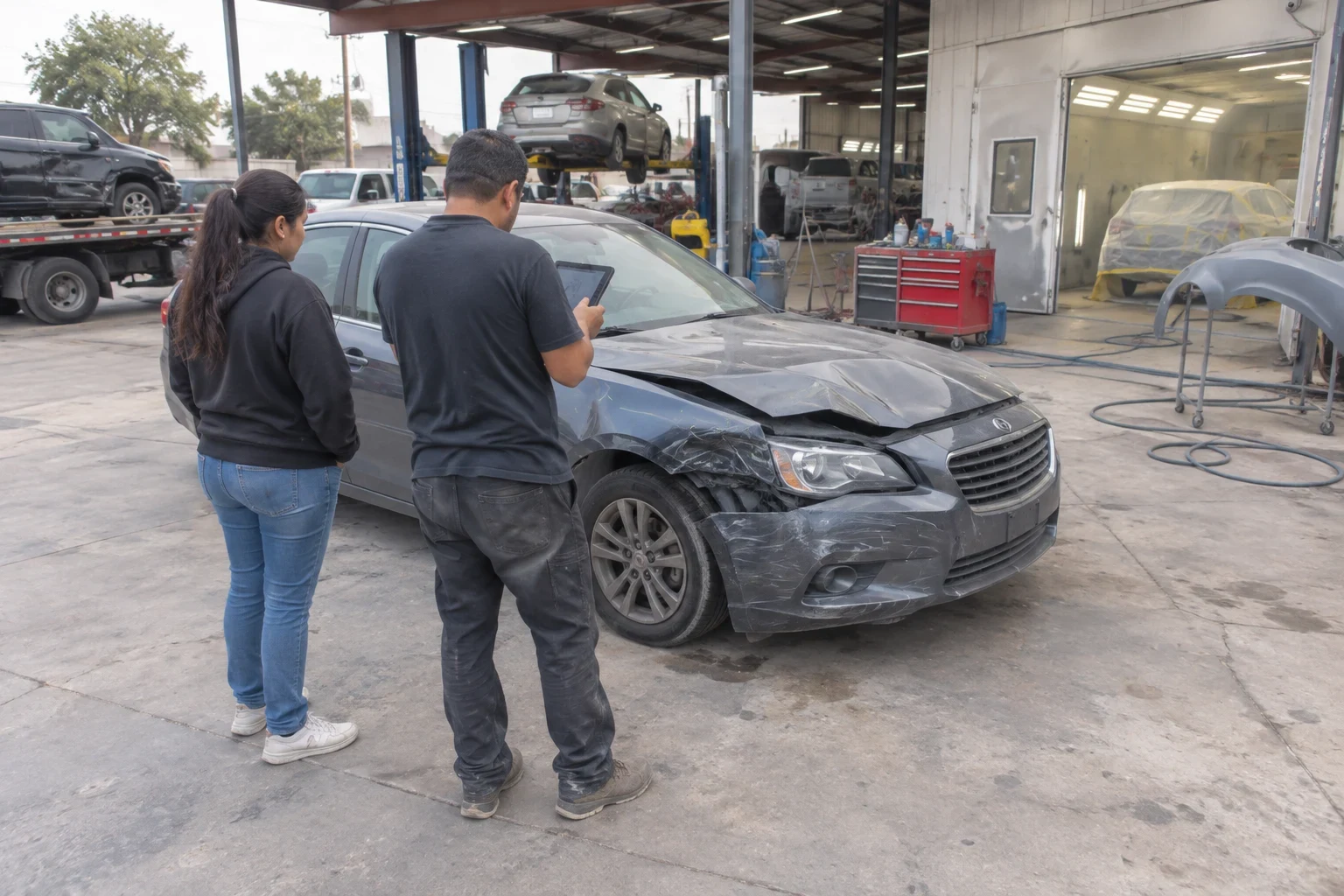
We look it over with you, ask how the accident happened and note anything you have noticed since. Where the car was hit tells us where to look for hidden damage.
- 2
We find everything that was damaged
We take apart the impact area, measure when needed and photograph what we find. The estimate is written from that teardown, not from a quick walk-around.
- 3
You approve the plan
We go over the estimate line by line, including what we recommend repairing and what needs replacing. If an insurance claim is involved, we share our findings with your insurer too.
- 4
We repair in the right order
Structure first, then mechanical and electrical parts, then body panels and paint. Doing it in this order keeps later steps from being undone.
- 5
Quality check and pickup
We recheck panel gaps, test the safety systems and road test the car. When you pick it up, we show you what was done and answer your questions.
What moves the cost of collision repair
Two cars with similar-looking damage can have very different estimates, because the price is set mostly by what sits behind the panels. Finding that damage at the start is how we keep the final bill close to the estimate you approved. Here is what makes the biggest difference.
- How far the impact reached
- A hit that stops at the bumper cover costs far less than one that crushed the absorber, bent the reinforcement and pushed back the radiator support.
- Parts on your vehicle
- Headlights with built-in electronics, radar units and heated mirrors cost more to replace than simpler parts. Newer cars tend to have more of them in the areas that get hit.
- Structural work
- If the frame or unibody needs measuring and straightening, that adds equipment time and labor.
- Paint and blending
- Tri-coat and pearl colors take extra steps to match, and blending into neighboring panels adds time so the repair doesn't stand out.
Collision repair questions
Why might the estimate change once work starts?
Some damage stays hidden until panels are off, such as a cracked mounting bracket or a bent bar sitting behind the bumper. We take the impact area apart before writing the full estimate, so most of those findings are already on it. If something new still shows up, we phone you, explain it and wait for your go-ahead before we touch it.
Is it safe to drive my car in after a crash?
Usually it is, as long as no warning lights are on, nothing is leaking, the lights work and the steering tracks straight. If any one of those is off, a tow is the safer choice. Give us a ring, tell us what you see and hear, and we will help you make the call.
Does my insurer get to pick the shop?
No. California drivers can choose where their vehicle is repaired. We work alongside your insurance company and send them the photos and findings from our inspection. The Insurance Claims page explains how that back-and-forth usually goes.
Do you fix damaged parts or replace them?
That is decided part by part. Plenty of metal panels can be repaired well, while many plastic brackets and safety components are better replaced. For each item we tell you what we recommend and the reason behind it.
How long will the repair take?
It comes down to how much was damaged, whether the structure needs work and how fast parts arrive. After our teardown we can give you an honest timeline, and we keep you posted as the repair moves forward.
Get a clear picture of the damage
Tell us what happened and what you are noticing. We will explain how we would inspect your car and what to expect next.